Newsletter 38: 2025 Kiwi saver |Annuity /Superannuation| Protection Association of NZ.
Hi everybody
KASPANZ was formed in February 2013, and we continue to enhance our reputation with our regularly refreshed website with retirement income articles and comment. The Consumer voice must be heard, the economist voice, and a limited diet of individual commentators of various worth, needs additional stimulus and Kaspanz tries to provide that through information and influence. Remember to click onto our website www.kaspanz.com on a regular basis to see what is there, and remind friends and associates. We are no longer an Incorporated Society, but we do seek supporters, a simple e-mail to alwaugh@xtra.co.nz of your Kaspanz support welcomed
You can also get free updates of new website information per e-mail alert. Look for the home page icon. The site posts new articles weekly, and we welcome comment. See the disclaimer at the end of the newsletter re content!
EDITORIAL
Have you noticed its people in suits, high income earners, or well-paid Talk back hosts who suggest means testing “income” ( Never Assets) when the topic of NZ Superannuation comes up. They never suggest capital gains or assets testing, often being veracious in their opposition. The latest example is Sunday Star Times editor Tracy Watkins, writing 2 recent editorials on the Topic. The “Suits Brigade” are often awash with their own asset protection and trusts to camouflage their own individual income level. Those suggesting means testing to NZ Superannuation, must equally accept all trusts and asset protection schemes be removed, so the accurate measurement of all individual income applies to all.
Means testing is usually poor policy, difficult to target and accurately police the margins of where the boundaries are set, significant admin costs to establish and further it creates a them and us mentality, reducing community trust and confidence. One of the great strengths of universal benefits is that they create a sense of solidarity and shared understanding. Means tested benefits create the opposite, divisions, and misunderstanding. Jim Anderton (MP) said in 2006 a “them or us” approach was not the way for New Zealand to get things done. Wise words from a wise owl. The New Zealand approach to Superannuation is recognized by many off shore commentators as the primary example of how to address retirement income issues.
I dug through the history files and found comment from Michael Littlewood (see his 2025 views at the end of this newsletter), considered by many the Guru of New Zealand Superannuation knowledge.
 |
Amongst other things Michael said
“I used to favour income tests for NZS because, said quickly, it does not make a lot of sense to collect tax from everyone, including the poor, and pay a pension to people who on any reasonable measure, do not need it. The devil, however, is in the detail. Australia is a good illustration of what can go wrong – Australia’s means-tests (a very complex mix of income and asset-testing) among other things mean:
- They have more than we do invested in the primary residence;
- They ‘retire’ about two years earlier and have much lower participation rates at older ages;
- They still have high rates of 100% pensions and part pensions;
- A hugely complex regulatory environment that will shortly become even more intrusive;
- High rates of avoidance activities;
- Higher rates of pensioner poverty than in New Zealand.
I have concluded that a universal pension is a simpler, more understandable, more transparent arrangement that is much cheaper to administer and more effectively deals to the reason we have a pension – to reduce or eliminate poverty in old age.”
Littlewoods sentiment is echoed by many others. Research papers over the last 20 years, have a consistent theme of supportive conclusions re NZ Superannuation, our Retirement Commissioner and the NZ Societies of Actuaries being 2 recent examples. The final word to Martin Hawes, author, and commentator on retirement income policy,
“New Zealand Superannuation (NZ Super) is a thoroughly excellent scheme. It is most retired people’s financial bedrock, providing reliable income that appears every fortnight and allows people to at least buy the basics. The scheme is universal (nearly) and means that there is little or no absolute poverty amongst pensioners in New Zealand. It is relatively cheap to administer and, because it is not taxed at a special higher rate for those at the age of eligibility, it provides a financial foundation without disincentivising further work.”
*Preventing poverty in old age, Guest opinion, Kiwi Blog, 2025. Michael Littlewood
The only reliable way to eliminate (or reduce) poverty in old age is for the government to provide a universal, taxable pension, regardless of income or means, where the annual amount payable is linked to an inflation-related measure, such as average wages. The pension should be paid to everyone above the ‘state pension age,’ regardless of work status and should be taxed as ‘ordinary’ income.
Means-tests are superficially logical but are complex, expensive to administer and generate unintended consequences (the Australian experience). Paying a pension to someone who does not ‘need’ it may seem wasteful but the virtues of universality tend to outweigh the purities of targeting.
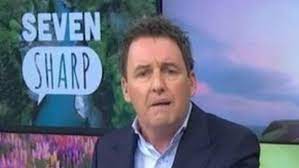 MIKE HOSKING ZB TALKBACK HOST SINCE 2008
Make your own mind up re this piece. Self (DIY)is a sound concept, though Mikes comment “Aussie has it sorted” is way of the mark. Mike is an opinionated right winger, who mixes evidence-based opinion, with social media noise, and right-wing bias. A dollar each way commentator, full of self-importance and lots of bigotry, he has captured the Talk back sound waves for a long time now, surrounded by a fawning fan base and nepotism. Mike has no University degree, suggesting a possible untrained mind!
There was a survey out last week that broadly supported the Government’s moves around KiwiSaver, as in the 3% and 3% going to 4% and 4%.
But they wanted the Government to do something about the cut in contribution from the state.
Small hint – if you rely on the Government for any consistency around long term projects, forget it.
From the very beginning of KiwiSaver, the Government were always going to be the weak link.
When it comes to big picture stuff, dedication and focus from a government is a casualty of the three-year political cycle. They were never going to be our friend on retirement savings.
The best advice I offer anyone, including our kids, is do it yourself. It is y our life, your decision, and your future, so do it yourself.
To show you how hopeless we are at saving in this country, figures released last week in America showed their KiwiSaver, what they call their 401k, hit a record high at 14.3%.
So, while we are mucking around on 3-4% they are up to over 14%.
Here is the kicker – the industry says it really should 15% if you want to be comfortable. A psychological step change is required and I am not sure we will ever get there.
Whether its employer contributions that get offered instead of more pay, or whether it is the Australian style compulsion, a lot of countries do it a lot of different ways and most of them have dealt with the age of retirement as well.
We basically are stuck with 65-years-old, and angst around even a debate about changing it, and far too many people who get to retirement and are stuck with a state-funded payout that has never been good and will not serve you well, if it is all you must live off.
There is of course no reason for this to even be a problem. Lee Kuan Yew many years ago in Singapore took a third world country, told them to save, forced them to save, and now they are rich.
The answers are all there. Australia has it sorted, the Norway fund is famous, and even the Americans at 14.3% seem to have it solved.
We need to look and learn and then get our act together and apply a bit of basic discipline to our long-term futures that do not rely on government.
E-MAIL CONFIRMATION 9 June 2024 Stats NZ; What is the definition of “employed”.
Kia Ore Alec
That is correct, to be employed you only have to work one hour per week, also if working unpaid in a family business, unpaid is also counted, as employed.
Kathy Bethell Stats NZ
- Editor comment : No wonder the stats are skewed, with that definition, to be counted as paid employment, 1 hr per week qualifies.
YOUR RETIREMENT SAVINGS ARE THERE TO BE SPENT. DO NOT BE AFRAID TO SPEND!
Money contributor
June 21, 2025
For years, or maybe even decades, today’s retirees have been doing the right thing. They have saved. Budgeted. Knocked off the mortgage. Built their superannuation balances quietly and consistently, through market ups and downs, job changes, family chaos, and rising costs of living.
They have done without at times, put others first, and followed the advice to squirrel away as much as they could for the day, they finally stopped working.
But now that retirement is here, or just around the corner, there is a new kind of challenge. One that we do not discuss much, and one that spreadsheets cannot really solve. Because while many retirees have a decent stash of savings, they are not sure how, or if, they should start using it.
They have spent decades being sensible, stretching every dollar, putting off indulgence, and quietly building security. Now they are sitting on their pile of financial nuts … and feeling strangely frozen.
They are not sure if they are allowed to spend it. They worry about being frivolous. They hesitate to take that big trip, or even upgrade the car. They track expenses to the cent, even when they do not need to any more.
It is not a problem everyone has, of course. But more retirees than you would think are struggling with the same question: “I have done the hard part. Am I allowed to enjoy it?”
How do you start spending what you have saved?
It is not as easy as it sounds. Many retirees are finding it incredibly difficult to switch gears, from saving, protecting, and growing their money – to using it. Even when they have run the numbers, even when they are told they are “financially secure,” even when the money is sitting right there in their super fund or bank account, ready to be drawn down.
They have been squirrels for so long, carefully gathering and guarding every financial nut, that the idea of cracking into the pile feels unsafe. Maybe even irresponsible. A little bit scary. And, for some, quietly guilt-inducing.
Advertisement
But here is the thing: this is exactly what the money was for. Not to be hoarded. Not to be passed on untouched. It was saved to be used – to support a life. To create flexibility. To fund freedom and fulfilment in the years after full-time work.
And yet, the data tells us many Australians are not doing that.
Recognise that being careful has served you well, but it does not have to define your retirement.
The Retirement Income Review in 2020 found that most retirees live off the income their assets generate, drawing down on very little of the capital itself.
A 2022 Financial Services Council report showed similar patterns: retirees tend to underspend relative to what they could afford, even when they have more than enough to last their lifetime. Some even die with more in super than they had when they retired.
What is going on here
Part of it is pure habit. You do not spend 30 or 40 years being careful with money only to wake up one day and become a carefree spender. That mindset does not just switch off because you have hit retirement age.
But there is also a deeper fear running underneath: the fear of running out. The “what if” scenarios take over: what if I live to 95? What if I need aged care? What if there is another market crash? What if my kids need help? What if my partner gets sick?
Those are all fair questions. Retirement is longer than ever, and health and aged care costs are real concerns. But for many people, the bigger issue is that fear takes over the facts. It is not that they cannot afford to spend, it is that they do not feel safe doing so.
And on top of fear, there’s guilt. Retirees today are from a generation that worked hard, often sacrificed, and prioritised others. For many, spending on themselves, especially on things that feel indulgent such as travel, hobbies or “fun money” triggers extraordinary feelings of discomfort. Even when they have permission. Even when they have earnt it.
So, what happens?
They keep living cautiously. Watching the balance in their super. Hesitating over every upgrade. Delaying the big trips until “next year.” Holding off just in case. And then the window starts to close.
Because the real risk in retirement is not just running out of money, it is running out of time. Running out of health. Running out of energy or opportunity to do the things that money was meant to unlock in the first place.
We often tell people to plan for a retirement that could last 25 or 30 years, which is true. But the years when you can hike, travel, explore or take on big new adventures are front-loaded. The first 10 or 15 years matter most. If you wait too long, you might still have the money but not the same ability to enjoy it.
So, what is the answer?
It is not reckless spending. It is not a luxury cruise every six months (unless you are into that). It is intentional spending, with the same kind of planning, values and thoughtfulness that got people here in the first place.
For some, that starts with creating an experiences budget and setting aside a modest amount each year just for the things that make life feel rich. A dedicated travel fund. A hobby or pursuit allowance. Grandkid adventures. Better seats at the theatre. Better seats on the plane.
For others, it is about creating certainty so they feel free to spend. That might mean putting two years’ worth of living expenses in a low-risk account, and letting the rest of their investments keep working in the background.
Or buying a lifetime income stream that can guarantee their core cost of living will always be covered, no matter how long they live. That simple buffer can create the confidence people need to relax and enjoy what they have saved.
And for almost everyone, it is about permission. Recognising that being careful has served you well, but it does not have to define your retirement. You have been the squirrel. You have done the work. You have got the pile.
Now it is time to start using it. Not all at once. Not recklessly. But with purpose, joy, and confidence that this time of your life is what the money was for.
Bec Wilson is author of the bestseller How to Have an Epic Retirement and the newly released Prime Time: 27 Lessons for the New Midlife. She writes a weekly newsletter at epicretirement.net and hosts the Prime Time podcast.
- Advice given in this article is general in nature and is not intended to influence readers’ decisions about investing or financial products. They should always seek their own professional advice that considers their own personal circumstances before making financial decisions.
Expert tips on how to save, invest and make the most of your money delivered to your inbox every Sunday
GUEST POST: On the long-term costs of New Zealand Superannuation: more affordable now? by Michael Littlewood:

As New Zealand’s population ages and as the proportion of over-65s increases, the cost of New Zealand Superannuation (NZS) is rising. We know that and it does not help us understand the issues to create headlines that catastrophise the expected costs.
The pensions payable in the future, public and private, will be claims on tomorrow’s economy, so the best way to express the expected cost of NZS is as a proportion of tomorrow’s economy. At present, this is probably best measured by the Gross Domestic Product (GDP). This is not a perfect measure, given the number of factors that bear on its calculation, particularly for long periods into the future. But it is the best we have.
A catastrophiser will cite the billions of dollars of costs today and the even greater billions of dollars of costs tomorrow but that is misleading and matters much less than the ability of tomorrow’s economy to meet those claims.
Pensioners pay income tax on NZS so the government pays with one hand and collects with the other. Again, what matters to future voters is the net cost of pensions.
With that introduction, let us look at what the Treasury thinks about the expected net cost of NZS. Since 2000, the Treasury has published estimates that put together all the known information about the drivers of the cost of NZS: number (and expected number) of pensioners, mortality expectations, expected growth of the national average wage and prices (those drive the annual calculation of the level of NZS) and all the assumptions that drive estimates of future growth.
The Treasury’s ‘New Zealand Superannuation Fund Contribution Rate Model’ (NZSF Model) works out contributions to the NZSF and expected future drawdowns. Those calculations are done twice a year and are archived here[1].
Given the headlines created recently by apparently dire, future projections, I was curious to see what the Treasury now thinks is the best estimate of the net cost of NZS in future decades.
The table uses the Budget Economic and Fiscal Update (BEFU) versions over the last 25 years.
| Expected net costs of NZS (as a % of GDP) – NZSF Contribution Rate Model | ||||
| Year Model run | NZS net cost in that year | Net cost in 2050 | Net cost in 2060 | Net cost in 2070 |
| 2000 | 3.7% | 9.0% | 9.7% | 10.0% |
| 2005 | 3.3% | 7.5% | 7.8% | 8.1% |
| 2010 | 3.7% | 6.4% | 6.9% | 7.0% |
| 2015 | 4.1% | 6.3% | 6.9% | 7.4% |
| 2020 | 4.5% | 5.7% | 6.5% | 7.1% |
| 2023 | 4.1% | 5.6% | 6.2% | 6.7% |
| 2024 | 4.3% | 5.5% | 6.2% | 6.7% |
| 2025 | 4.4% | 5.4% | 6.0% | 6.4% |
Yes, over the last 25 years the current year’s cost of NZS has risen by 19% (0.7% a year) but over the same 25 years (2000-2025), the expected net cost of NZS in 2050 has fallen from 9.0% of GDP to 5.4% (down 40%).
NZS is expected to cost less, in real terms, in 2050, 2060 and 2070 than we expected 25 years ago? That sounds like a ‘good news’ story to me. The pattern of possible costs across the table is consistent; consistently downwards.
We know this is all based on a bunch of assumptions that have varied over the 25 years but, in each case, the estimate is the Treasury’s best contemporary guess about those future costs.
Focussing on just the 2025 numbers, the Treasury expects the net cost in 2070 to be about 2 percentage points of 2070’s GDP higher than today is 4.4% (+45%).
So how come the real future cost seems to be falling over the last 25 years? NZS is the numerator in this equation; the denominator is GDP and that has grown more than the Treasury expected in the early 2000s and in subsequent years, due to a combination of increasing labour force participation rates and higher immigration numbers. That combination drives the reduction. For example, the 2000 model predicted the net cost of NZS in 2025 would be 5.3% of predicted GDP. In fact, it turned out to be just 4.4%, a reduction of 17% in real terms.
That is why real, future economic growth is so important in this discussion. An actuarial colleague and I put a substantial submission together for the 2019 Retirement Commissioner’s Review. We called it Informing the 2019 Review – 133 questions that New Zealand needs answered[2]. Of nine key “reforms that really matter,” we ranked greater economic growth than we, or even the Treasury, expect as the #1 priority:
“Greater economic growth (than expected) should be central to discussions on every aspect of public policy, including retirement incomes. At the foot of every significant retirement or pension policy proposal should be the question: ‘How does this help New Zealand grow more than under current settings?’ Not all policy changes have to be about economic growth, but if we do not get that growth, we will not see material improvements in the standard of living of the population, including retirees.”
How do we judge whether NZS is/will be ‘affordable’ in 2070?
We could compare the cost of our pensions with those in other countries. International comparisons of public pension systems are difficult – the OECD tries to do that in its Pensions at a Glance 2024[3]. The net cost of government spending on public pensions across all OECD countries was an average 7.0% of GDP in 2020 (and will be higher now). And that does not include the cost of favoured tax-treatment for private savings in all other countries. New Zealand’s $0.55 bn on KiwiSaver subsidies for 2026[4] is exceptionally modest in that regard.
So, New Zealand’s net 6.4% for NZS in 2070 (up from today’s 4.4%) looks modest in that context. But that does not necessarily make it affordable.
We need to talk about NZS. The 2019 Submission already cited had something to say about that as well:
“New Zealand needs a research-led review of every aspect of NZS… New Zealand has never done such a review before. NZS is the best Tier 1 scheme in the world but it can undoubtedly be improved.”[5]
DISCLAIMER
The information in this newsletter is of a general nature only,
and is not professional advice. Kaspanz accepts no liability for
its accuracy. The newsletter is principally the work of the
Newsletter editor. The intent of the newsletter is
to provide information, to assist the reader in their own
various view points, and is not paid content, it is compiled on a
voluntary basis. It is an attempt to be helpful to readers on
retirement income matters and policy commentary. No liability is assumed by Kaspanz for losses suffered by any person or organisation relying directly or indirectly on information published on this site. Views expressed in any article are the views of the respective authors.